Wet process
Stonewash
A wash applied to the finished garment that abrades and softens the fabric, giving it a worn, faded look. It is one of the best-known denim finishes.
Contact us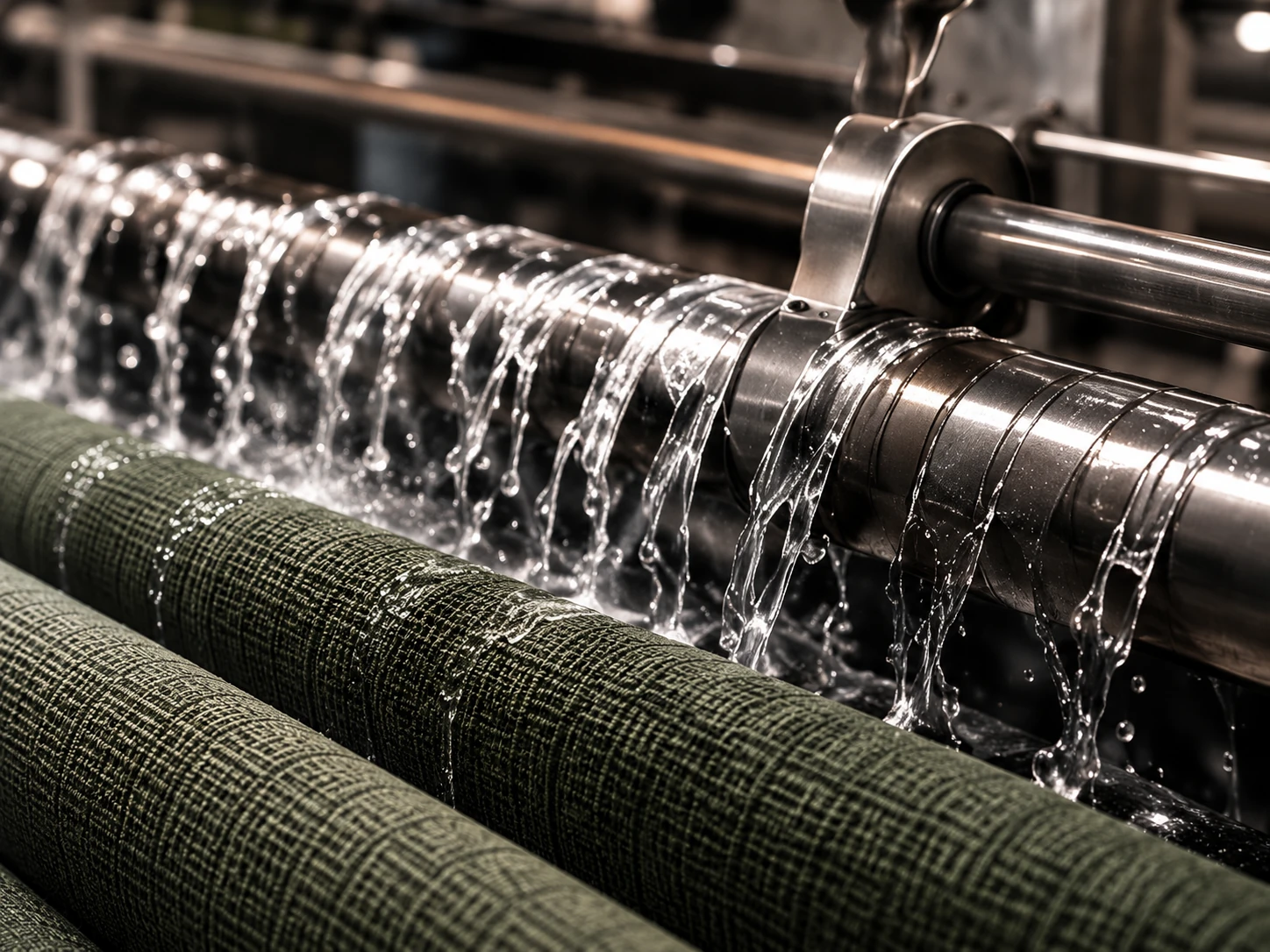
- How it works
- Garments are tumbled in industrial rotary machines together with pumice stones. The friction removes part of the dye from the yarn surface and breaks down the fabric's stiffness. Intensity depends mainly on wash time and the amount of stone. Garments are then rinsed to remove residues. Variants using enzymes achieve a similar effect with less stone or none.
- Result
- Faded, uneven colour with contrast between lighter and darker areas, especially at seams, hems and edges. Softer hand feel and a more flexible garment from the first wear.
- Best applications
- Indigo denim and other dyed cotton fabrics, in casual, vintage or worn-look collections.
- Garments it is commonly used on
- Jeans, denim jackets, skirts, shorts and shirts; also twills and some garment-dyed knitwear.
- Care points and remarks
- Abrasion can reduce fabric strength and wear seams, buttons, rivets and labels. Results vary between batches, so approving a sample before production is common practice. Water use and stone residues are environmental aspects the industry takes into account; enzyme alternatives are one way to reduce them.
General technical description of the process.